Implosion Blasting
Implosion
Blasting
Controlled demolition through planned explosive techniques
Implosion blasting is a demolition technique that uses carefully placed explosive charges to collapse structures inwardly in a controlled manner. This method is typically used for structures where surrounding access is limited and where a predictable collapse pattern is essential.
It is one of the fastest demolition techniques available for large, reinforced concrete structures. Implosion blasting requires detailed planning, structural analysis, and compliance with safety protocols to ensure the entire process is safe for personnel and surrounding properties.
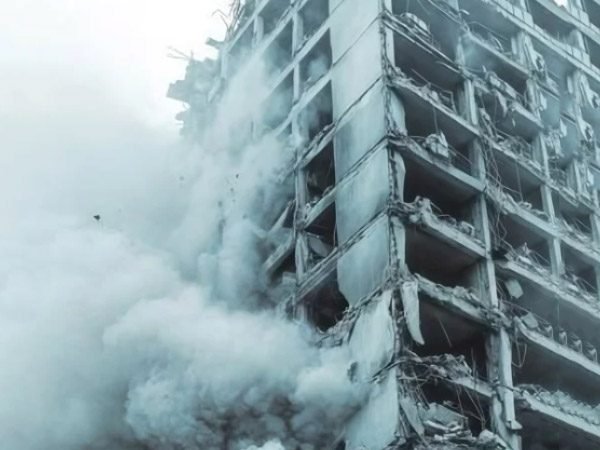
Technical Planning for Implosion Blasting
Implosion blasting begins with a thorough study of the structure to understand load paths, material strength, and collapse behaviour.
Based on this study, blasting design, safety measures, and execution sequencing are planned to achieve predictable and controlled collapse.
Steps Involved in Implosion Blasting
Structural Planning and Study
The structure is studied to understand strength and collapse behaviour.
Pre-Blast Hole Drilling
Holes are drilled in selected columns to prepare for a controlled pre-blast.
Pre-Blast Explosive Placement
Explosives are placed to assess concrete displacement direction.
Execution of Pre-Blast
A pre-blast is carried out to observe structural response.
Final Blast Hole Drilling
Required holes are drilled at specified angles for final blasting.
Final Explosive Placement
Explosives are placed based on the planned direction of fall.
Circuit Connection
The blasting circuit is connected and checked before final blasting.
Final Blast Execution
The trigger is pressed to execute the final controlled blast.
Discuss Your Implosion Blasting Requirement
Submit your details to initiate a structured discussion for implosion blasting planning and execution.
Safe Execution of Implosion Blasting
Implosion blasting demands strict safety control throughout the operation to protect people, property, and surrounding infrastructure.
- Blast area is secured, barricaded, and continuously monitored before detonation begins
- Explosive placement follows approved blast design, safety standards, and regulatory guidelines
- Detonation sequence is executed under controlled conditions to ensure predictable structural collapse
- Post-blast inspection is carried out to confirm site safety, debris stability, and clearance readiness